
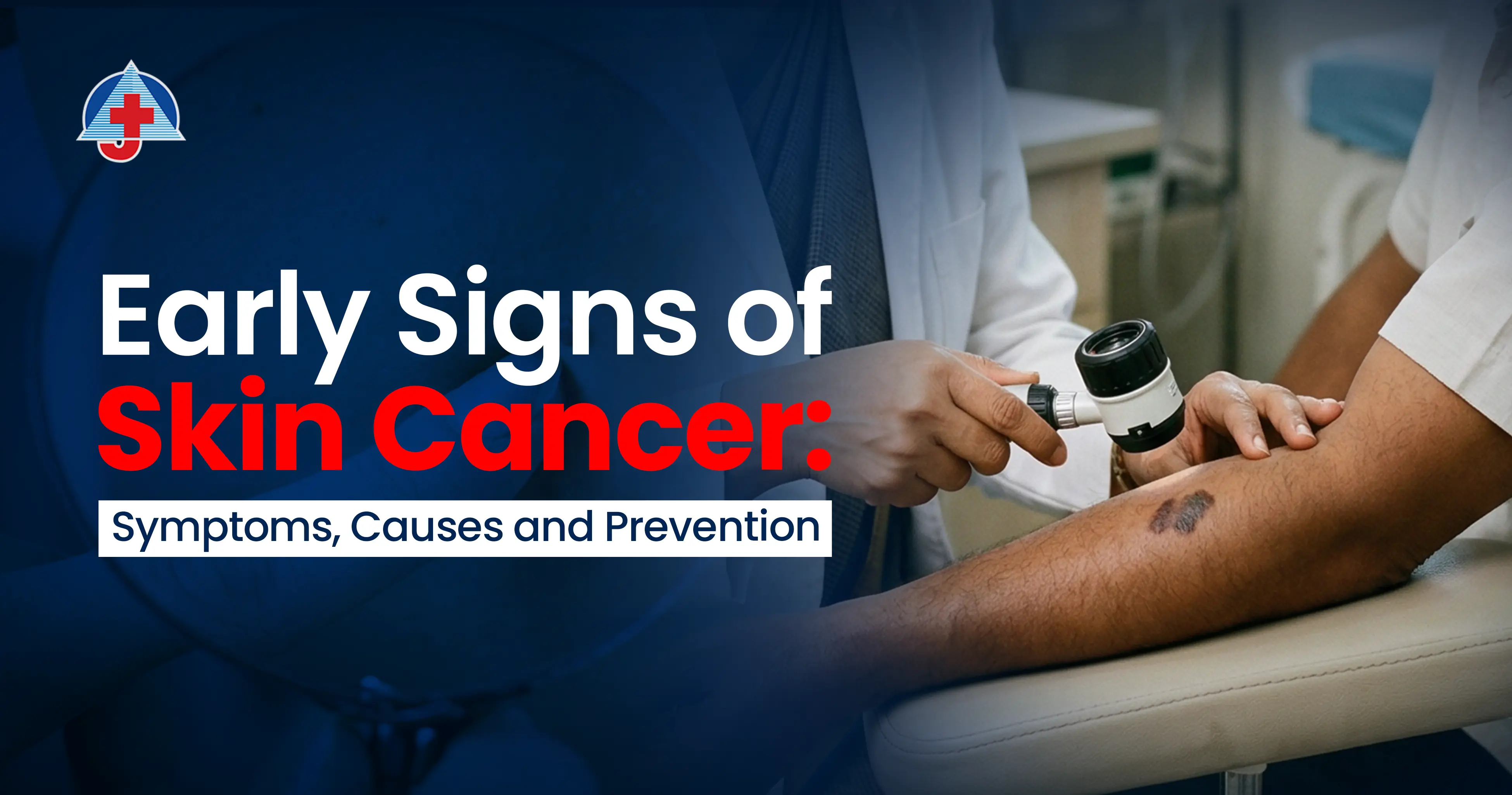
Early Signs of Skin Cancer: Symptoms, Causes and Prevention
Most people think of skin cancer as something that happens to others, or only to those who spend every waking hour under a scorching sun. But the reality is more uncomfortable. Skin cancer is the most commonly diagnosed cancer globally, and it does not always announce itself loudly.
A stubborn spot that will not heal. A mole that seems a little different than last month. These small, easy-to-dismiss changes are often where the story begins.
Understanding skin cancer symptoms early is not about living in fear. It is about knowing what to look for so you can act fast, when it matters most.
What is Skin Cancer?
Skin cancer is the uncontrolled and abnormal growth of skin cells, most often triggered by damage to the DNA in those cells. When UV radiation, environmental exposure or other harmful factors alter the genetic instructions inside skin cells, the body's normal repair process can fail, allowing damaged cells to multiply unchecked.
The skin is the body's largest organ, and it is constantly exposed to the outside world. That makes it particularly vulnerable. Skin cancer symptoms can show up anywhere on the body, though they most commonly appear on skin that has had regular sun exposure, like the face, neck, arms and hands.
There are several types of skin cancer, each behaving differently and requiring different approaches to treatment. Catching any of them early makes an enormous difference in outcomes.
Types of Skin Cancer
Melanoma
Melanoma is the most serious of all skin cancer types. It originates in the melanocytes, the pigment-producing cells that give skin its color. What makes melanoma dangerous is how quickly it can spread to other organs if not caught in time.
It often looks like an unusual mole, a dark patch or a pigmented lesion that changes over weeks or months. While it accounts for a smaller percentage of all skin cancer diagnoses, it is responsible for the majority of skin cancer deaths.
Basal Cell Carcinoma
Basal cell carcinoma (BCC) is the most common type of skin cancer worldwide. It develops in the basal cells, which sit at the base of the outermost skin layer. BCC tends to grow slowly and rarely spreads to other parts of the body, but it can cause significant local damage if ignored for too long. It often appears as a small, pearly or translucent bump, sometimes with visible blood vessels or as a flat, flesh-colored lesion that resembles a scar.
Squamous Cell Carcinoma
Squamous cell carcinoma (SCC) develops in the squamous cells that make up the middle and outer layers of the skin. It is the second most common type and tends to grow faster than BCC. SCC can appear as a firm red nodule, a rough or scaly patch or an open sore that bleeds and does not heal properly. Prolonged UV radiation exposure is one of its biggest drivers, and people who work outdoors for extended periods over many years face a higher cumulative risk.
Early Signs of Skin Cancer
The earlier skin cancer is detected, the more treatable it is. Knowing what to watch for can genuinely save a life.
Unusual mole growth is one of the first red flags. If a mole you have had for years suddenly starts growing in size, or if a new mole appears and grows quickly, that deserves attention.
Skin discoloration is another sign. A spot or patch of skin that looks noticeably darker, lighter or takes on an uneven mix of colors may indicate abnormal cell activity beneath the surface.
A bleeding skin spot that you have not scratched or injured is a warning sign that should not be brushed off. When skin cells grow abnormally, the fragile surface of the lesion can bleed easily, sometimes without any apparent cause.
Irregular mole borders matter too. A healthy mole tends to have clean, even edges. A mole with jagged, blurred or scalloped borders is one of the classic early indicators of melanoma.
Itching or painful skin spots are often dismissed as insect bites or dry skin. However, if a specific spot persistently itches, stings or hurts without an obvious reason, it is worth having a dermatologist examine it. Not all skin lesions are painful, but some are, and the sensation alone can be a signal worth investigating.
What Does Skin Cancer Look Like?
Skin cancer does not always look dramatic. That is what makes it easy to overlook.
An abnormal mole might look perfectly ordinary at first glance. The difference lies in subtle changes, one side looking different from the other, the edges not quite symmetrical or the color shifting from a single shade of brown to a mixture of black, tan and even red or white.
Dark skin patches can appear as flat areas of hyperpigmentation that deepen over time. These are not the same as freckles or age spots, though they can superficially resemble them.
Red or scaly spots are common with squamous cell carcinoma. These patches can look almost like a rough skin irritation or eczema, which is why they are frequently missed. If a red, flaky patch does not respond to moisturiser or over-the-counter treatments and keeps returning, it needs a professional assessment.
A simple and medically recommended way to self-check moles is the ABCDE rule: Asymmetry, Border irregularity, Color variation, Diameter larger than a pencil eraser and Evolution or change over time. Any mole that fits one or more of these criteria warrants a doctor's visit.
Risk Factors for Skin Cancer
Understanding who is most vulnerable helps in taking the right precautions.
-
UV radiation is the single biggest modifiable risk factor. Both UVA and UVB rays damage the DNA in skin cells and this damage accumulates with every unprotected exposure. UVB rays are particularly linked to sunburn and direct DNA injury, while UVA rays penetrate deeper into the skin and contribute to long-term cellular changes. So when asking which UV rays cause cancer, the answer is that both play a role, with UVB rays being the more direct culprit for most skin cancers.
-
Excessive sun exposure over a lifetime, including regular outdoor activity without sunscreen or protective clothing, significantly raises risk. A history of sunburn, especially severe blistering burns during childhood, is particularly associated with melanoma later in life.
-
Tanning beds are not a safer alternative to the sun. Indoor tanning devices emit concentrated UV radiation, and using them before age 35 substantially increases the risk of developing melanoma.
-
Genetics and family history play a role as well. If a close family member has had skin cancer, your personal risk is higher. Certain inherited gene mutations can make cells less capable of repairing UV-induced damage.
-
Fair skin is a recognised risk factor, as lighter skin contains less melanin, the pigment that offers some natural protection against UV radiation. However, people with darker skin are not immune. Skin cancer in darker skin tones is often diagnosed later, partly because the signs can be less visible and partly because awareness remains low.
For more detailed risk doctor dive, you can also check: https://www.cancercenter.com/cancer-types/skin-cancer/risk-factors/uv-rays
How Doctors Diagnose Skin Cancer
If you notice any concerning changes and visit a dermatologist, diagnosis typically follows a clear path.
A thorough skin examination is the starting point. Your doctor will visually assess every inch of your skin, not just the spot you are concerned about, looking for anything that appears abnormal.
Dermatoscopy involves using a handheld device called a dermatoscope to examine a suspicious spot in magnified detail. It allows doctors to see patterns in the skin structure that are not visible to the naked eye, helping distinguish between harmless lesions and those that need further investigation.
If a spot looks suspicious after examination, a skin biopsy is the definitive next step. A small tissue sample is removed and examined under a microscope by a pathologist. This is the only way to confirm whether cancer is present, and if so, what type and stage.
How to Prevent Skin Cancer
Prevention is largely within your control, and a few consistent habits can make a meaningful difference.
Use sunscreen daily. Choose a broad spectrum sunscreen with SPF 30 or higher. Broad spectrum means it protects against both UVA and UVB rays. Apply it generously, reapply every two hours outdoors, and do not skip it on cloudy days.
One topic worth noting is the relationship between sunscreen and vitamin D. Some people worry that daily sunscreen use will block their body's ability to produce vitamin D from sunlight. While it is true that vitamin D synthesis in the skin depends on UVB exposure, most dermatologists agree that daily sunscreen use does not completely eliminate vitamin D production.
For those concerned about vitamin D benefits for the body and adequate levels, a brief period of safe sun exposure or supplementation can address any gap. It is also worth noting that vitamin D deficiency carries its own range of effects on the body, including fatigue, weakened immunity and even vitamin D deficiency hair loss, which is a lesser-known but well-documented concern. Maintaining healthy vitamin D levels matters as much as protecting your skin, and both goals can be achieved together with the right habits.
Avoid midday sun when UV radiation is strongest, typically between 10 AM and 4 PM. Even on overcast days, UV rays penetrate clouds and reach your skin.
Wear sun protective clothing. Long-sleeved shirts, wide-brimmed hats and UV-blocking sunglasses are practical defenses. Many outdoor clothing brands now offer UPF-rated fabrics specifically designed to block UV radiation.
Schedule regular skin self-checks and professional skin examinations. Getting familiar with your own skin means you will notice changes faster. If you are in a high-risk category, annual check-ups with a dermatologist are a sound habit to build.
These sun protection tips are not complicated or expensive to follow. Sunscreen, shade and covered skin are three of the most powerful tools you already have access to, and used consistently, they reduce your risk significantly over time.
When to See a Doctor
Some signs should prompt you to book an appointment without delay.
If a mole bleeds without trauma, if a spot changes shape, size or color within weeks, if a skin wound does not heal despite consistent care, or if you notice a new dark streak beneath a nail that has no injury to explain it, these are all situations where professional evaluation should not wait.
The underlying principle is simple: when something on your skin changes and you cannot explain why, see a doctor. Early-stage skin cancer is highly treatable. Late-stage skin cancer is not. The difference between the two is often a matter of how quickly the change was caught and assessed.
Conclusion
Skin cancer is serious, but it is also one of the most preventable and treatable cancers when identified early. The signs are often visible. The tools for prevention are accessible. What it requires is awareness and the willingness to act on what you notice.
As a trusted cancer hospital in Mangalore, A.J. Hospital and Research Centre provides comprehensive AJ Hospital skin cancer treatment through a dedicated team of specialists. Whether you are looking for early screening, diagnosis, or advanced skin cancer treatment in Mangalore, our oncology hospital in Mangalore is equipped to guide you through every step of your care with expertise and compassion.
Your skin speaks before symptoms become serious. The only question is whether you are listening.
Watch our full YouTube video to know more about skin cancer, its types and how to protect yourself: https://youtu.be/hPNISy7f3qE?si=6RzM37E--95m0vAI
FAQ's
The earliest signs include a mole that changes in size, shape or color, a spot that bleeds without injury, and persistent itching or painful areas of skin that do not heal.
Both UVA and UVB rays contribute to skin cancer. UVB rays cause direct DNA damage and are most linked to sunburn and basal or squamous cell cancers, while UVA rays penetrate deeper and play a role in melanoma development.
Daily use of a broad spectrum sunscreen with SPF 30 or higher significantly reduces the risk of skin cancer by blocking harmful UVA and UVB rays. Combine it with protective clothing and avoiding peak sun hours for the best protection.
Sunscreen does reduce UV absorption to some extent, but studies suggest that typical daily use does not completely eliminate vitamin D synthesis. Spending brief periods outdoors safely or using supplements can address any concerns about vitamin D deficiency.
A dermatologist will perform a visual skin examination, possibly followed by dermatoscopy for a magnified view, and a skin biopsy if any lesion appears suspicious. The biopsy confirms whether cancer is present.
Yes. While melanin provides some natural UV protection, people with darker skin are not immune to skin cancer. Skin cancer in darker skin tones is often diagnosed at a later stage, which is why awareness and regular skin checks matter for everyone.
See a doctor if a mole bleeds, changes rapidly in appearance, if a sore does not heal within a few weeks, or if any new or unusual skin lesion appears. Early detection dramatically improves treatment outcomes.