
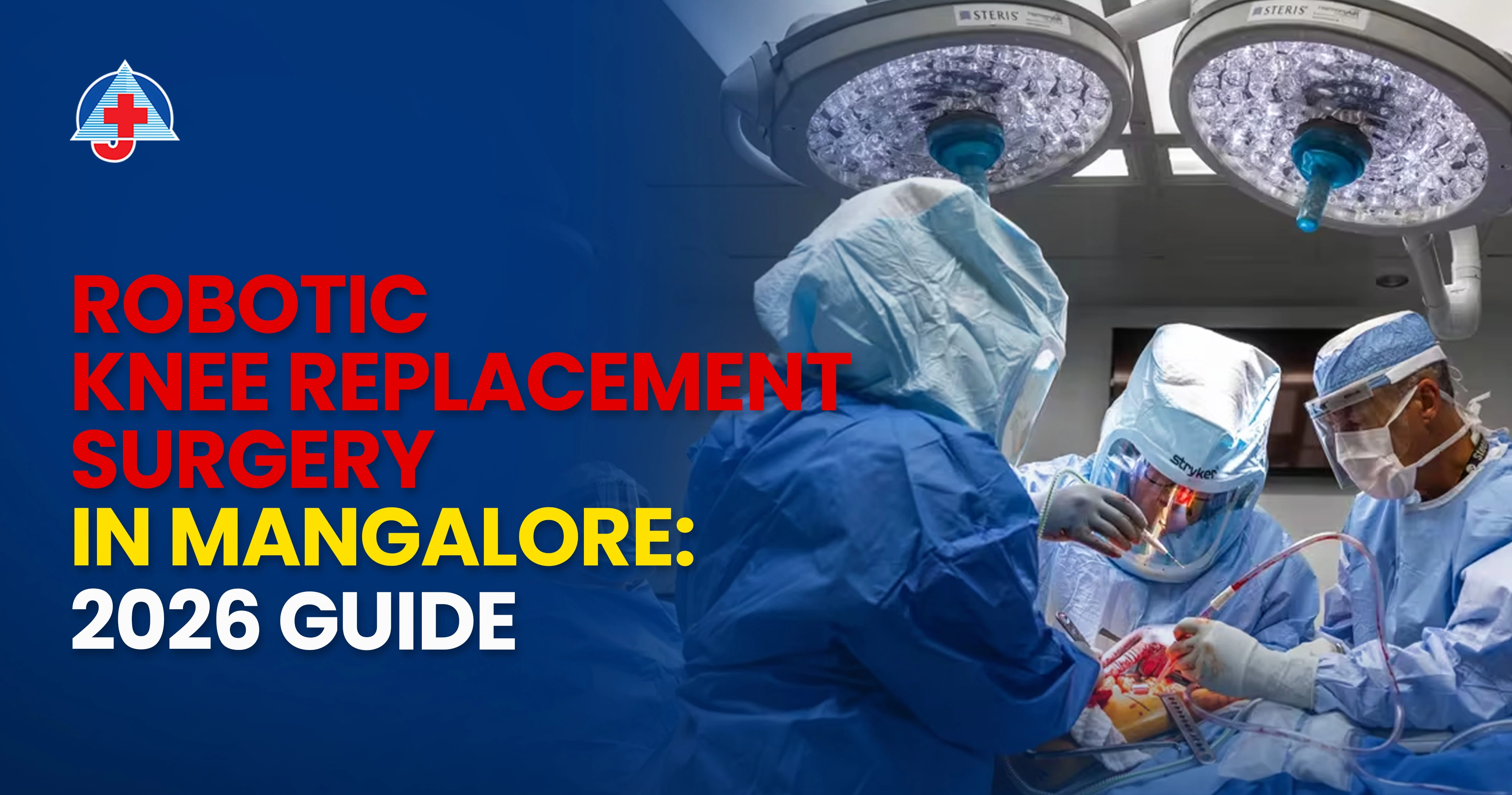
Robotic Knee Replacement Surgery in Mangalore: 2026 Guide
Knee pain changes how you live.
A morning walk becomes difficult. Climbing stairs can be challenging. Playing with your grandchildren becomes difficult, leaving you watching from the sidelines.
For younger people, sports and exercise that once felt natural now cause pain and discomfort.
When medicines and therapy stop helping, many people consider knee replacement surgery.
Today, robotic technology is making this surgery safer and more precise. In 2026, about 13% of knee replacements will use robotic assistance. Medical experts estimate this number could reach 50% by 2030. Why?
The reason is straightforward. Robotic surgery gives doctors a level of accuracy that is hard to match by hand.
Making a decision about surgery is not easy and should not be rushed. This guide will help you understand robotic knee replacement. You will also learn what it is, what it costs and how to choose the right hospital.
What is Robotic Knee Replacement Surgery?
Robotic knee replacement is a form of robotic orthopedic surgery where a computer-assisted robotic system helps the surgeon operate with greater precision.
The robot does not operate on its own. The surgeon controls the entire procedure and makes all decisions. Think of the robot as a precise tool that helps the surgeon work with greater accuracy.
This is especially valuable in complex cases, such as when patients have pre-existing bone deformity or when surgeons cannot use conventional instruments.
This robot-assisted surgery can be used for 2 types of procedures:
Total Knee Replacement: The surgeon replaces all 3 compartments of the knee joint (inner, outer, and kneecap area) with artificial parts. Doctors recommend total knee replacement surgery when arthritis or damage affects the entire knee.
Partial Knee Replacement: The surgeon replaces only the damaged part of the knee, leaving the healthy parts intact. Partial knee replacement surgery is suitable when arthritis affects just 1 compartment of the knee.
Before surgery, doctors take a scan of your knee to create a 3D model. This helps assess knee cartilage damage and plan the procedure accurately. The surgeon uses this to plan where the new joint will go and how much bone to remove. On the day of surgery, the surgeon makes small, precise incisions to reach the knee joint.
The robotic system tracks your knee's position and gives the surgeon live feedback. During surgery, the robotic arm makes precise cuts with minimal soft tissue damage and removes damaged bone and cartilage carefully.
It also stops the surgeon from moving outside the planned area, which protects the healthy tissue around your knee.
The surgeon then places the new joint exactly where the plan says it should go, ensuring perfect alignment and positioning.
Systems like the Smith+Nephew CORI can create this 3D model during surgery itself without needing a pre-operative CT scan. This saves preparation time without affecting quality.
Benefits That Make a Difference
There are many advantages to robotic knee replacement surgery compared to traditional manual knee replacement:
-
Reduced blood loss - Manual surgery causes more bleeding; robotic surgery makes precise cuts with minimal blood loss
-
Faster recovery - Most patients experience quicker discharge and shorter hospital stays than traditional surgery
-
Less pain - Robotic surgery is gentler on tissues, requiring fewer pain medicines after the procedure
-
Better long-term results - Perfect joint alignment reduces wear over time and lowers the chance of needing another surgery
-
Quicker return to activities - Within 3 months, most patients return to the activities they enjoy
Because the surgeon places the new joint with great precision, it fits your knee well. This reduces wear over time and lowers the chance of needing another surgery in the future.
Advantages and Disadvantages of Robotic Knee Replacement
On the positive side, the accuracy is hard to beat. The system works consistently even during long procedures and real-time feedback helps the surgeon make better decisions. Studies from early 2026 show that surgeons become fully comfortable after about 80 procedures.
On the other hand, surgery takes a little longer because of the setup. Not all hospitals have robotic systems. The cost is higher than a standard knee replacement, but still much lower in India than in Western countries.
Understanding the Risks
Like any surgery, robotic knee replacement carries some risks. These include infection, blood clots, nerve damage and loosening of the artificial joint.
However, these risks are similar to those of traditional knee replacement and modern techniques have reduced them significantly. Following your surgeon's instructions carefully can reduce these risks even further.
For most patients, the relief from chronic pain and improved mobility make the procedure worthwhile, though outcomes can vary from person to person.
Recovery Timeline After Robotic Knee Replacement
Recovery varies by age and activity level. In the first 2 to 3 weeks, you will use a walker or crutches. By 4 to 6 weeks, swelling goes down and you can do more on your own. Most patients walk without help between 6 and 12 weeks.
Younger, active patients often return to low-impact activities within 2 to 3 months and high-impact sports by 4 to 6 months.
The knee replacement recovery time for elderly patients is something many families ask about. Recovery may take 6 months to a year, with balance training being an important part of the process.
Robotic Knee Replacement Surgery Cost in India
Cost is a major reason people choose India for robotic knee replacement. The quality of care is excellent and the price is much more affordable than in most other countries.
Hospitals across India today use the best systems like Smith+Nephew CORI, MAKO SmartRobotics, ROSA Robotics and VELYS. Many insurance plans cover this surgery fully or partly and the Ayushman Bharat scheme helps eligible patients with costs.
To avail the Smith+Nephew CORI machine for robotic knee replacement surgery in Mangalore, you can visit A.J. Hospital.
Who Should Consider Robotic Surgery?
Doctors recommend robotic knee replacement when medicines, injections or physical therapy have not improved knee pain.
Younger, active patients with severe knee damage benefit from better long-term results and joint longevity. Older adults with arthritis who haven't responded to other treatments experience gentler recovery.
Robotic surgery also works well for complex knee conditions, previous knee surgeries, knee ligament surgery repairs, knee cap surgery, or knock-knee surgery correction when patients need joint replacement.
Your orthopedic doctor will look at your knee condition, age, activity level and health before recommending this.
Life After Surgery
Within 3 months, most patients return to the activities they enjoy. This could include walking comfortably, climbing stairs without pain, playing with grandchildren or activities like cycling and swimming. More demanding activities are usually possible by 6 months.
A well-placed knee joint can last 15 to 20 years or more with proper care and regular low-impact exercise. Most patients say their quality of life improves greatly and keeps getting better.
Finding the Right Hospital
When searching for the best robotic knee replacement in India, a few things matter most.
Look for a hospital with expert surgeons trained in robotic-assisted procedures. The hospital should offer comprehensive care packages, insurance assistance and seamless support from consultation through recovery to ensure a smooth experience.
The robotic system they use is equally important. Choose a system that offers:
-
Image-free smart mapping without requiring pre-operative CT scans, reducing radiation exposure and costs
-
Real-time 3D digital modelling for precise implant positioning
-
Bone and tissue preservation during surgery
-
Flexibility to handle total knee replacement surgery and partial knee surgery
In Mangalore, A.J. Hospital & Research Centre is among the first facilities in the Dakshina Kannada region to offer robotic knee replacement surgery.
A.J. Hospital uses the Smith+Nephew CORI Surgical System to provide all these benefits, with full support from your first visit to full recovery.
Making the Decision
Knee pain affects more than how you move. It affects your mood, your independence and your quality of life. When other treatments stop working, robotic joint replacement is a safe and precise option worth considering.
If this sounds like the right option for you or a loved one, we can help at A.J. Hospital & Research Centre. They offer robotic orthopedic surgery with experienced surgeons, modern facilities, and care built around you.
To learn more about robotic knee replacement surgery in Mangalore, watch our detailed explanation on YouTube. Click the link below or visit our YouTube channel for complete information: