
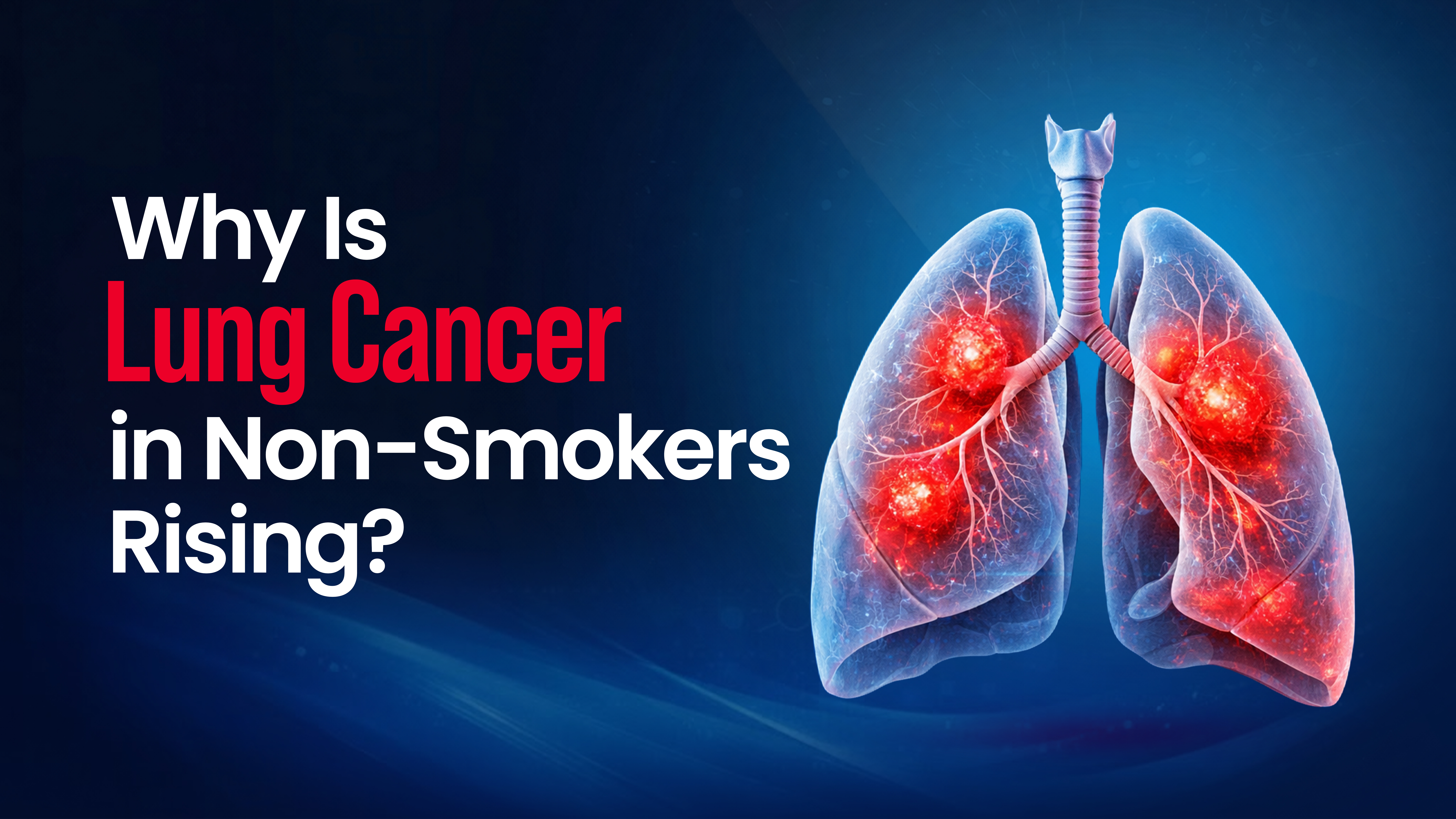
Why Is Lung Cancer in Non-Smokers Rising?
The words "lung cancer" and "smoker" have been paired together for so long that when someone who has never touched a cigarette receives a lung cancer diagnosis, there is confusion.
How can this happen? More importantly, why is this happening more often?
Lung cancer in non-smokers is no longer rare. According to the Indian Council of Medical Research (ICMR), lung cancer cases were expected to rise significantly by 2025, with an estimated 81,219 cases among men and 30,109 among women. While current figures are still unfolding, the reasons behind this climb go beyond what most people expect. Understanding what causes lung cancer in non-smokers starts with looking at the air we breathe, the spaces we occupy and the invisible risks we often overlook.
What Is Lung Cancer in Non-Smokers?
When lung cancer develops in someone who has never smoked or quit more than 15 years ago, doctors classify it as lung cancer in non-smokers. The most common type of lung cancer in this group is adenocarcinoma, which begins in the outer lung regions and grows slowly. Because people assume lung cancer only affects smokers, early signs of lung cancer like persistent cough, chest discomfort or unexplained fatigue are dismissed as minor issues.
What Causes Lung Cancer in Non-Smokers?
Several factors contribute to rising cases among people who have never smoked.
- Secondhand smoke exposure
What is secondhand smoke? It is the smoke released from burning cigarettes and exhaled by smokers. Living with a smoker or spending time where smoking occurs exposes non-smokers to the same harmful chemicals. Even brief, repeated secondhand smoke exposure increases lung cancer risk significantly over time.
- Radon gas
Radon is an odourless, radioactive gas that seeps into homes from the ground and is the second leading cause of lung cancer after smoking. Homes with basements or those built on certain soil types are more vulnerable. Testing for radon is simple and can identify this hidden risk.
- Air pollution
Cities with high particulate matter, vehicle emissions and industrial pollutants see higher lung cancer rates among non-smokers. Long-term exposure to polluted air damages lung cells. People living near highways, factories or areas with poor air quality face elevated risks.
- Occupational hazards
Certain jobs expose workers to carcinogens like asbestos, silica dust, diesel exhaust and manufacturing chemicals. Construction workers, miners and factory employees may inhale these substances daily without adequate protective measures.
- Genetic factors
Some people carry genetic mutations that increase lung cancer susceptibility, even without external triggers. Family history can indicate inherited risk, though it does not guarantee the disease will develop.
- Indoor cooking and heating
In many Indian households, cooking with solid fuels like wood, coal, or biomass releases harmful smoke indoors. Prolonged exposure to poorly ventilated kitchens increases lung cancer risk significantly.
Why Early Detection Matters
Early signs of lung cancer are easy to miss. A cough that lingers longer than usual, occasional shortness of breath, or chest pain that comes and goes may not seem serious. People attribute these symptoms to allergies, stress, or ageing. By the time lung cancer symptoms become obvious, the disease has often progressed.
Screening for high-risk individuals can catch cancer early when lung cancer treatment is most effective. Low-dose CT scans can detect small tumours before symptoms appear, offering a better chance at successful intervention.
How Lung Cancer Prevention Works in Daily Life
Prevention is not about eliminating all risk but reducing exposure to known hazards and making informed choices.
- Test your home for radon
Radon testing kits are affordable and easy to use. If levels are high, mitigation systems can reduce radon concentration significantly.
- Improve indoor air quality
Use exhaust fans while cooking, ensure proper ventilation and consider air purifiers if you live in a high-pollution area. Switch to cleaner cooking fuels where possible.
- Avoid secondhand smoke
If someone in your household smokes, encourage them to smoke outdoors and away from living spaces. Avoid spending time in enclosed areas where smoking occurs.
- Use protective equipment at work
If your job involves exposure to dust, chemicals or fumes, use masks, respirators and protective gear consistently. Employers should provide adequate safety measures but it is also important to take personal responsibility.
- Stay aware of air quality
Check air quality indexes daily, especially during high-pollution seasons. Limit outdoor activities when pollution levels spike and wear masks if needed.
- Recognize symptoms early
Do not ignore persistent cough, unexplained weight loss, chest pain or difficulty breathing. Early medical consultation can make a significant difference.
What Does Lung Cancer Treatment Look Like?
Treatment depends on the stage, type and location of the cancer. Non-smokers often respond well to targeted therapies because their tumours may have specific genetic mutations.
Options include surgery to remove tumours, radiation therapy using high-energy beams, chemotherapy with cancer-killing drugs, targeted therapy that blocks molecular signals allowing cancer growth and immunotherapy that helps the immune system attack cancer cells. These treatments can be used alone or in combination for better outcomes.
The Role of Awareness and Action
Lung cancer in non-smokers challenges the assumption that only smokers are at risk. The reality is more complex. Environmental factors, genetic predisposition and daily exposures all play a role in whether someone develops the disease.
The rise in cases among non-smokers should shift how we think about lung cancer prevention. Screening programs, public awareness campaigns and access to early diagnosis can save lives. Simple steps like testing for radon, improving indoor air quality and recognising lung cancer symptoms early can reduce risk.
For those already diagnosed, advancements in lung cancer treatment offer hope. Personalised medicine, improved surgical techniques and emerging therapies mean better survival rates and quality of life.
If you are experiencing persistent respiratory symptoms or have concerns about your risk factors, seeking expert guidance is essential.
At A.J. Hospital & Research Centre, specialists provide comprehensive lung cancer screening, diagnosis, and treatment tailored to individual needs. Early intervention makes all the difference.