
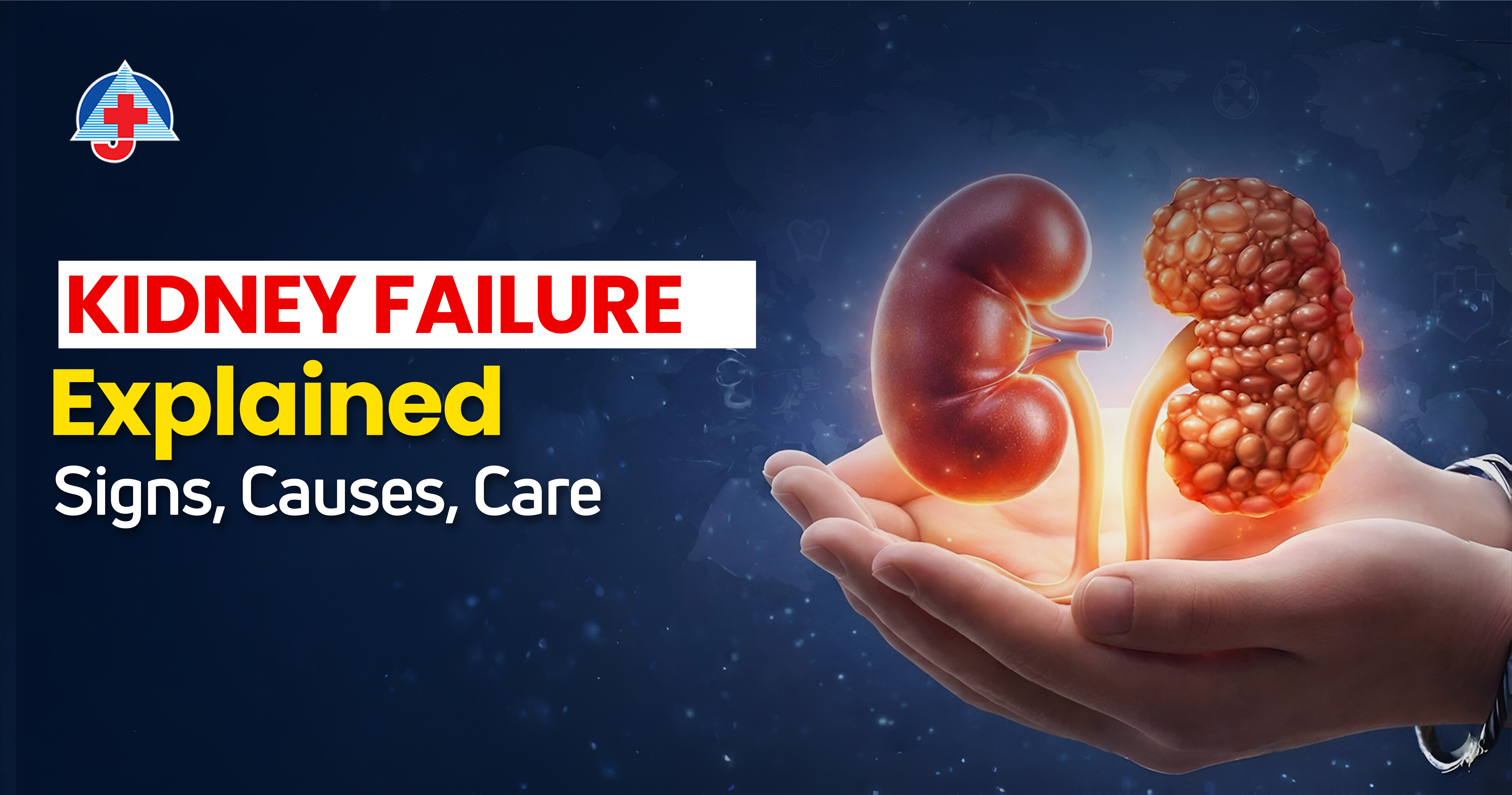
Kidney Failure Explained Simply: Signs, Causes, Care
Kidneys are the filters of your body.
They clean your blood, remove waste, and help maintain a healthy balance of salts and fluids. When this filter becomes weak or stops working properly, it is called kidney failure.
Many people above the age of 35, especially those with diabetes or high blood pressure, are at higher risk. Kidney problems can also affect children, so age is not a protection.
This guide explains kidney failure in simple language, based on what doctors see every day at A. J. Hospital & Research Centre. Our aim is to help you understand your kidneys, recognise early warning signs, and know when to get help.
What are the causes of kidney failure?
Kidney failure causes are often linked to long-term health conditions that gradually damage the kidneys. The most common causes include:
-
Diabetes
-
High blood pressure
-
Repeated infections
-
Kidney stones
-
Birth defects or hereditary kidney diseases
-
Autoimmune diseases
-
Uncontrolled bowel disorders
-
Unknown causes
What are the risk factors for kidney failure?
Several factors increase the likelihood of developing kidney problems. These are some of them:
-
Family history
-
Age above 35
-
High blood pressure
-
Repeated urinary infections or kidney stones
-
Autoimmune conditions
-
Diabetes
-
Obesity and sedentary lifestyle
-
Smoking and excess alcohol
Recognising these risk factors early and taking preventive measures can protect your kidneys and reduce the chance of developing kidney failure.
What are the types of kidney failure?
Doctors classify kidney failure into two types.
-
Acute kidney failure happens suddenly and may improve with treatment.
-
Chronic kidney failure develops slowly over months or years and usually requires dialysis or kidney transplantation.
What are the early signs of kidney problems?
The first signs of kidney failure are usually subtle.
Many people do not notice symptoms until the kidneys are already damaged.
Look out for:
-
Swelling in the legs, feet or face
-
Reduced urine or foamy urine
-
Tiredness or low energy
-
Loss of appetite
-
Nausea
-
Back pain near the kidneys
-
Difficulty concentrating
If you notice any of these early symptoms, especially if you have diabetes or high blood pressure, you should see a doctor.
What is an early warning of kidney failure?
One of the earliest measurable warnings is a rise in creatinine, a waste product found through a blood test. If creatinine remains high for 3 to 6 months, doctors diagnose chronic kidney disease. That is why regular check-ups are important.
How to check kidney function at home?
You cannot directly check kidney function at home. However, there are a few general indicators you can monitor that may give clues about your kidney health:
Blood pressure – high blood pressure can strain your kidneys.
Blood sugar – uncontrolled sugar levels increase the risk of kidney damage.
Urine colour and frequency – changes may indicate kidney problems.
While monitoring these at home can help you stay aware but a proper diagnosis is still required. If you notice any unusual changes or risk factors, it is important to visit a hospital promptly to get your kidneys checked.
What are the signs of healthy kidneys?
Healthy kidneys show simple signs like:
-
Normal urination without pain
-
Clear or pale-yellow urine
-
No swelling in the body
-
Normal blood pressure
-
Good appetite and energy
Healthy kidneys do their work quietly. When symptoms appear, it means they need attention.
Can you live a normal life with kidney disease?
Yes, you can live a near-normal life with proper treatment.
Many people live well with early-stage kidney disease through diet control, medicines and regular monitoring.
If the kidneys fail completely, dialysis or a kidney transplant becomes necessary.
How do you deal with kidney failure?
Treatment depends on the stage of kidney failure.
1. Dialysis
There are two main types:
-
Haemodialysis. You come to the hospital three times a week. A machine filters your blood and returns it clean. Each session takes around four hours.
-
Peritoneal dialysis. A small tube is placed in your abdomen, and fluid is used to clean your blood at home. This method is less preferred in India because of high cost and maintenance needs.
Dialysis helps but is time consuming and can be painful because blood must be drawn and replaced repeatedly.
2. Kidney transplantation
A transplant gives the best chance of returning to a normal lifestyle. A healthy kidney from a donor is placed inside the patient’s body. The transplanted kidney usually works well for many years if medicines are taken regularly.
Check out our detailed video to learn more about kidney transplants and how they work: More about kidney transplant
Is one kidney enough for a donor?
Yes. Almost everyone can live a healthy and normal life with just one kidney. Some people are even born with one kidney and never realise it.
Robotic surgery in kidney transplant
Robotic surgery helps doctors perform precise operations with smaller cuts and less pain. In donor surgeries, the robot assists the surgeon, making the recovery quicker. Robotic transplant is growing in some centres, but it is more expensive.
Is kidney failure hereditary?
Some kidney diseases are genetic. Polycystic kidney disease is one example. If there is a family history of kidney failure, it is better to do check-ups regularly.
What foods should you avoid if you have kidney disease?
Avoid foods that put stress on your kidneys.
-
High-salt foods
-
Deep-fried foods
-
Chips and packaged snacks
-
Foods high in potassium like bananas and potatoes
-
Excessive protein, especially red meat
-
Cola drinks
A kidney-friendly diet must be personalised by your doctor or dietitian.
What foods are good for your kidneys?
Food that supports kidney health includes:
-
Fresh fruits like apples, pears and berries
-
Vegetables such as cabbage, cauliflower and carrots
-
Low-salt homemade food
-
Whole grains
-
Adequate water intake
-
Lean protein in small portions
A balanced diet slows kidney damage and supports overall health.
Can a kidney transplant patient live normally?
Yes. After a transplant, patients must take medicines called immunosuppressants daily to prevent rejection. This increases the risk of infection, so hygiene and regular check-ups are important. With proper care, most people return to work, travel and live an active life.
A caring reminder
Your kidneys rarely show problems until the damage has already begun, which is why staying proactive matters. If you’re unsure about your kidney health, this is the right time to get a simple kidney function test done. It’s quick, affordable, and can make a huge difference in preventing serious complications later.
At A.J. Hospital & Research Centre, our team is here to support you with clear information, timely tests, and compassionate care.
Take confident steps towards protecting your long-term health by coming in for a check-up soon.