
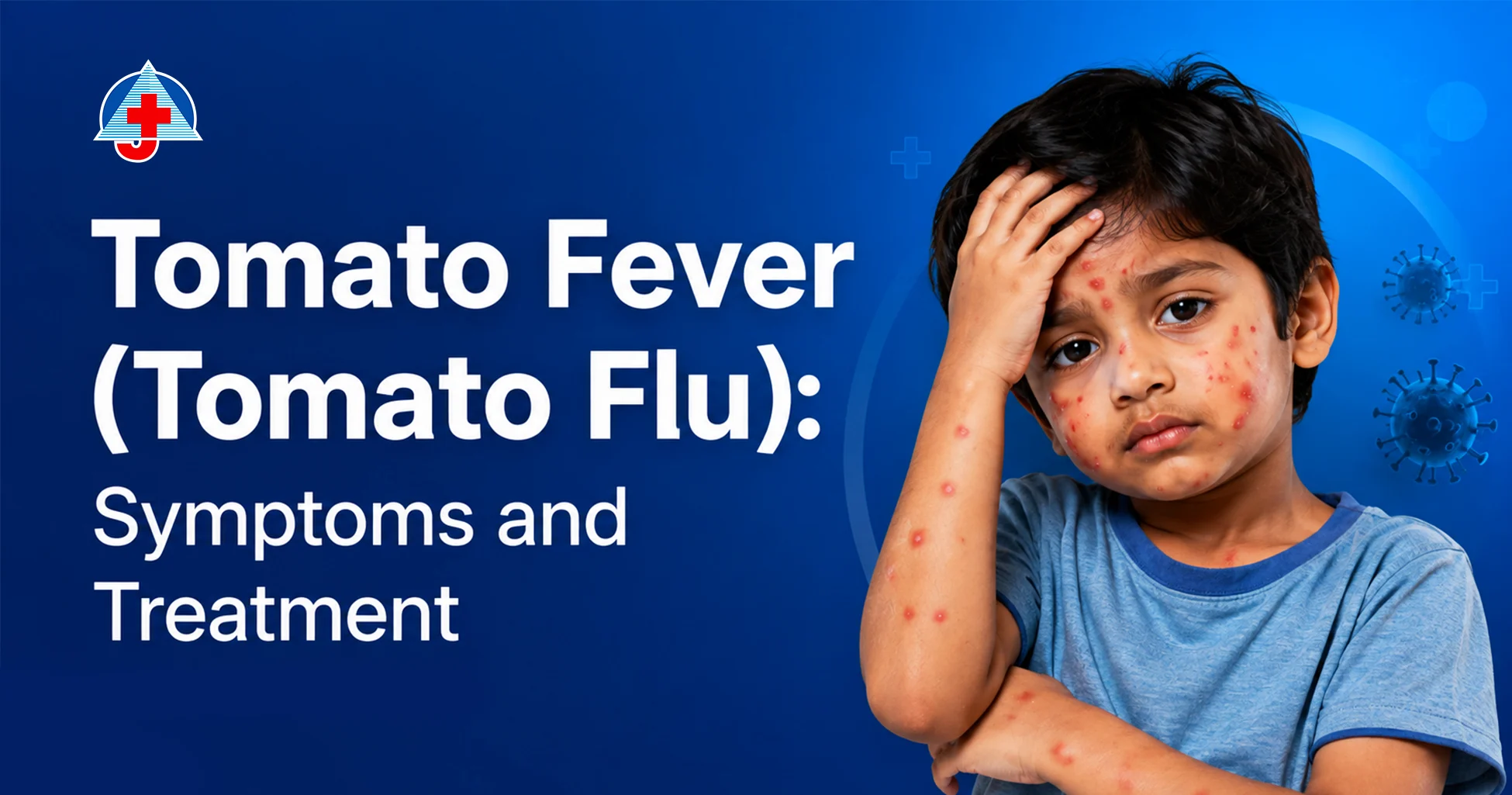
Tomato Fever (Tomato Flu): Symptoms and Treatment
Your child wakes up cranky with a mild fever and skips breakfast. By evening, you spot small red blisters on the hands, feet and around the mouth. Some swell to the size of a tiny tomato. It looks frightening.
In most cases, though, this is tomato fever, also called tomato flu, a mild viral illness that mainly affects young children and clears on its own.
This guide covers tomato fever in simple terms: its symptoms, causes, treatment, how long it lasts, and how to care for your child at home, plus where to find the best paediatrician in Mangalore if your child needs one.
Key Takeaways
● Tomato flu is a mild illness that clears on its own. It takes its name from the red, tomato-like blisters, not from eating tomatoes.
● Main symptoms include mild fever, tiredness, body aches, mouth ulcers and red blisters on the hands, feet and mouth.
● It mostly affects children under 5 to 10 years old. Adults rarely catch it.
● It usually lasts about 7 to 10 days and settles without special treatment.
● No antiviral cure exists. Care remains supportive: rest, fluids and fever control.
● Good hygiene and isolating the sick child stop it from spreading.
What is tomato flu? Tomato flu (also called tomato fever) is a mild and contagious viral illness that mainly affects young children. It causes fever and red, tomato-shaped blisters on the hands, feet and mouth. Most doctors treat it as a form of hand, foot and mouth disease, and it clears within about a week to 10 days.
What Is Tomato Fever (Tomato Flu)?
Tomato fever is a mild viral infection that mainly targets young children. It gets its name from the round, red, tomato-like blisters it causes, not from tomatoes. Most doctors treat it as a form of hand, foot and mouth disease (HFMD).
Doctors in Kollam, Kerala first identified tomato flu in May 2022. Health authorities tracked over 80 affected children under age 5 in Kollam district by late July 2022, with additional cases confirmed among children up to age 9 in Odisha. The illness later drew attention in Tamil Nadu and Haryana as well, taking the nationally reported total past 100 cases, with no deaths recorded from the outbreak.
Sources: The Lancet Respiratory Medicine; PMC / National Institutes of Health
When health teams sequenced the samples, they linked the outbreak to Coxsackievirus A16 and A6, the same viruses that cause ordinary hand, foot and mouth disease. So "tomato flu" is largely a local nickname for HFMD with unusually large, red blisters, rather than a separate new disease.
What Causes Tomato Flu?
The tomato flu virus belongs to a group called enteroviruses, mainly Coxsackievirus A16 and A6. These viruses spread easily among young children and cause fever and blisters. Knowing what causes tomato flu helps you protect your child.
How does tomato flu spread?
Tomato flu spreads through close contact with a sick person. The virus travels in coughs and sneezes. It also spreads through blister fluid and through dirty surfaces, toys or utensils. Dirty hands raise the risk.
After contact, the virus multiplies quietly for a few days before symptoms start. A child can pass it on during this early phase and while the blisters stay active. That is why doctors recommend isolating a sick child for 5 to 7 days from symptom onset.
Tomato Fever Symptoms in Children
The clearest tomato fever symptoms are red, tomato-sized blisters. They show up on the hands, feet and mouth, and can also appear on the buttocks.
These usually come with general viral signs. Common tomato flu virus symptoms include the following:
● Mild to moderate fever
● Tiredness and body aches
● Poor appetite and irritability
● Mouth ulcers and a sore throat
● The hallmark red blisters and rash
● Sometimes joint swelling, mild dehydration, nausea or loose motions
Most children feel mild symptoms that settle within a week or so. The rash starts as small red spots that grow into raised blisters. In tomato fever, some blisters swell and turn a deep, tomato red.
They sit mainly on the palms, soles and inside the mouth. Over a few days, they dry, crust and heal without scars if your child leaves them alone.
Tomato flu in children and infants
Very young children cannot say what hurts, so parents often notice behaviour first. Look for a few simple signs: unusual crankiness, poor feeding and drooling from mouth ulcers. A fever that starts before the rash is another clue.
Once blisters form inside the mouth, feeding can hurt. Watch closely that your baby still takes enough fluids. Because tomato flu in children spreads fast at daycares and playschools, tell the school early so they can act.
Tomato fever in adults
Tomato fever in adults stays uncommon but possible, usually in caregivers or people with weaker immunity. Adults can also get tomato flu, but they usually have mild symptoms: a fever and blisters for a few days that clear on their own.
Tomato Flu vs HFMD, Tomato Pox and Chickenpox
Parents often mix up these look-alike rashes. Knowing the tomato pox symptoms and how each rash differs helps you stay calm. The table below shows the key differences.
|
Illness |
Cause |
Rash location |
Key difference |
|
Tomato flu |
Coxsackievirus (A16 or A6) |
Hands, feet, mouth and sometimes buttocks |
Larger, round, tomato-red blisters; a form of HFMD |
|
Hand, foot and mouth disease |
Coxsackievirus and other enteroviruses |
Palms, soles and inside the mouth |
Smaller blisters; tomato flu is basically the same illness |
|
Tomato pox |
Usually the same tomato-flu blisters |
Hands, feet, mouth and body |
Another name for tomato flu, not a separate disease |
|
Chickenpox |
Varicella-zoster virus |
All over the body, including the trunk and scalp |
Itchy, fluid-filled blisters that spread across the whole body |
If you feel unsure which rash your child has, a paediatrician can tell them apart quickly by look and history.
Is Tomato Flu Dangerous or Contagious?
Tomato flu spreads easily, yet it stays mild for almost every child. Serious problems rarely happen, and no deaths have been recorded from the disease so far. Most children recover with simple home care. The illness is highly contagious, so isolation matters.
Keep the sick child at home, away from siblings and classmates, until the blisters heal. Watch for the warning signs listed later in this guide and call a doctor if any of them appear. Early advice catches the rare complication in time and gives you peace of mind.
How Long Does Tomato Fever Last?
Tomato flu usually lasts about 7 to 10 days from the first symptom to full recovery. A rough recovery timeline looks like this:
1. Days 1–2: Fever, tiredness, poor appetite and sometimes a sore throat.
2. Days 3–5: Red spots and blisters appear on the hands, feet and mouth. The fever usually eases.
3. Days 6–8: Blisters dry and start to scab. Your child feels much better.
4. Days 9–10: Skin heals. Energy and appetite return to normal.
No shortcut cure exists, but you can keep your child comfortable. Focus on rest, plenty of fluids and light food. Keep them away from other children and make hygiene the top priority. The body clears the virus on its own.
How Is Tomato Flu Diagnosed?
Doctors can usually diagnose tomato flu by examining your child. They look for a fever and red blisters on the hands, feet and mouth, and also consider your child's age. Most children do not need any tests.
However, if symptoms are severe, the doctor may order tests to rule out dengue, COVID-19 or chickenpox. When in doubt, let a paediatrician decide whether your child needs any tests rather than guessing at home.
Tomato Flu Treatment and Medicine
No specific antiviral medicine treats tomato flu. Treatment stays fully supportive, and the illness clears on its own. Online searches for an "antiviral for tomato flu" lead nowhere, because no such cure exists.
Good tomato flu treatment focuses on comfort and hydration. It includes the following:
1. Controlling fever and pain
2. Keeping your child well hydrated
3. Ensuring adequate rest
4. Gentle care for mouth ulcers
5. Isolation to protect other children
For fever and pain, doctors commonly suggest paracetamol, but the dose depends on your child's weight and age, so always let a doctor guide it. Do not self-medicate infants or give adult medicines to children.
If your baby is very young or has a high fever, ask a paediatrician before you give any tomato flu medicine. Cheap generic paracetamol sells widely in India, but the safe dose matters more than the brand, so always confirm it with your doctor.
Home care and what to eat
Simple home care keeps most children comfortable while they heal:
1. Offer plenty of fluids, such as water, coconut water, diluted juice or ORS, if the doctor advises it.
2. Serve soft, bland foods that do not sting mouth ulcers, such as curd rice, khichdi, mashed banana or porridge.
3. Sponge your child with lukewarm water to bring the fever down, not cold water.
4. Keep the skin clean and dry, and dress your child in loose, soft clothes.
5. Stop your child from scratching or bursting the blisters, since that invites infection.
6. Keep your child away from other children until the blisters heal.
7. Wash everyone's hands often at home.
8. Avoid acidic, salty or spicy foods such as citrus juice, chutneys and chips. These sting sore mouths and put children off eating.
When to see a doctor
Most children recover at home. Still, see a doctor quickly if your child shows any of these warning signs:
● A high fever that stays or keeps climbing
● Signs of dehydration such as very little urine, a dry mouth, no tears or sunken eyes
● Unusual drowsiness or trouble waking
● Refusing to drink or feed
● Repeated vomiting
These signs do not fit typical tomato flu. They need a medical check to rule out other causes.
How to Prevent Tomato Flu
Prevention comes down to hygiene and isolation. These steps lower the risk at home or school:
1. Isolate the sick child for about 5 to 7 days from the first symptom.
2. Wash hands often with soap, and use sanitiser when soap is not handy.
3. Disinfect toys, surfaces and shared items the child touches.
4. Do not share utensils, towels or clothes between children.
5. Wash and change bed linen and clothes regularly.
No tonic, vitamin or "immunity booster" prevents tomato flu. Clean hands, isolation and clean surroundings do the real work.
Tomato Flu in India, Karnataka and Mangaluru
Tomato flu gained attention in India after the Kerala outbreak in 2022. Between May and July that year, health authorities in Kollam district tracked over 80 affected children under age 5, with further cases confirmed in Odisha, Tamil Nadu and Haryana, pushing the nationally reported count past 100.
During that outbreak, India's Union Health Ministry treated tomato flu as a form of hand, foot and mouth disease and advised isolation and standard hygiene. For the latest official guidance, read the advisories from the Ministry of Health and Family Welfare, or check the Indian Council of Medical Research.
Sources: Ministry of Health and Family Welfare; Indian Council of Medical Research
Karnataka joined the states on alert after the Kerala cases, with health teams pushing surveillance and awareness. In coastal Dakshina Kannada, including Mangaluru, the risk is higher wherever young children gather, such as playschools, daycares and primary schools. It also climbs during the humid monsoon when viral illnesses spread more easily. Simple awareness and hygiene at home and school keep local children safe.
Best Paediatrician in Mangalore for Tomato Fever Care
If your child has a fever with tomato-like blisters, getting a same-day opinion from a qualified paediatrician matters more than searching symptoms online. When Mangalore parents ask who the best paediatrician in Mangalore is for conditions like tomato flu, HFMD and other childhood viral illnesses, the Department of Paediatrics & Neonatology at A.J. Hospital is built for exactly this, with experienced paediatricians, on-site labs for the rare case that needs testing, and 24/7 emergency backup if your child dehydrates or spikes a high fever after hours.
Looking for a paediatrician in Mangalore for your child? Book an appointment with our Paediatrics & Neonatology team or find a doctor directly.
Frequently Asked Questions
Conclusion
Tomato fever looks alarming. Yet for almost every child, it stays a mild illness. It clears within about 10 days with rest, fluids and simple home care. No antiviral cures it and no supplement prevents it.
Good hygiene, isolation and early medical advice for young children do the real work. Please do not self-diagnose or self-medicate your child. If the fever runs high or your baby will not feed or drink, see a doctor.
Does your child have a fever with a tomato-like rash? The Department of Paediatrics and Neonatology at A.J. Hospital, Mangaluru is ready to help.
Adults with symptoms can consult General Medicine. Our 24/7 emergency care supports children who fall ill after hours. You can also book an appointment or contact us today.