
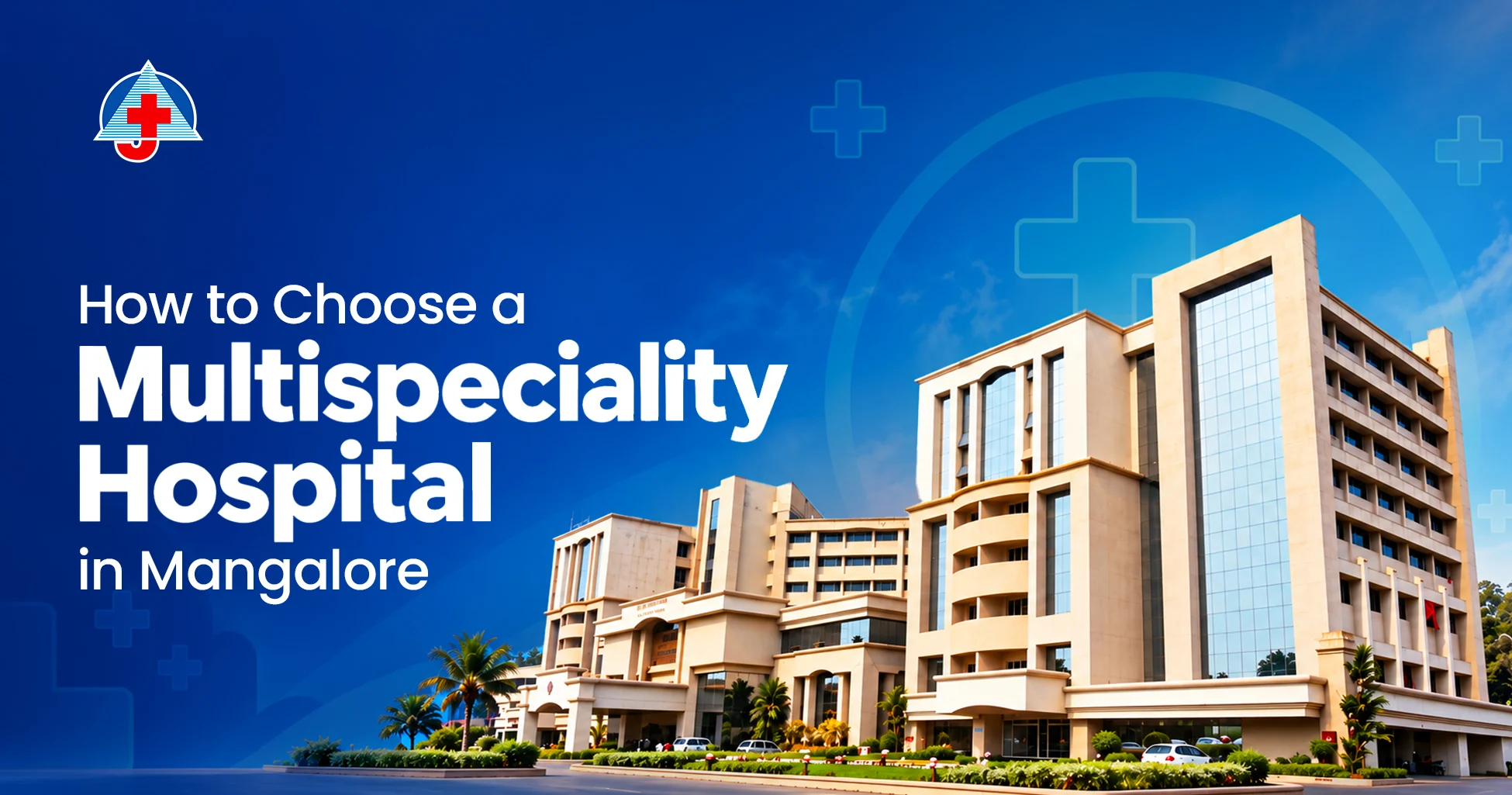
How to Choose a Multispeciality Hospital in Mangalore
Choosing a hospital is never easy. Most of the time, you have to decide when your family is already worried. It may be your father’s chest pain late at night. It may be a scan report that the doctor wants a specialist to see.
At times like this, the right multispeciality hospital in Mangalore can change the whole journey, from the first visit to the day you get better. Mangalore (Mangaluru) is now the main medical centre for Coastal Karnataka, so families here have real choices.
This guide shows you what to check before you pick a hospital. We look at the doctors, the departments, tests and scans, emergency care, surgery, safety standards, cost and insurance, and how easy the hospital is for your family. Read it before you decide, so you choose with a clear mind and not in a hurry.
|
In an emergency right now? Don’t wait to finish reading. Call A.J. Hospital on 0824 222 5533 / 0824 222 9333, or go straight to the Emergency Department at NH-66, Kuntikana, Mangalore. For an ambulance, you can also dial 108. |
Key takeaways
●A multispeciality hospital has many departments, doctors, tests, surgery and intensive care in one place so that they can treat you together.
●Check the doctors, departments, tests, emergency care, surgery, safety standards, and cost and insurance support.
●Mangalore is the main health hub for Dakshina Kannada, Udupi, Kasaragod and the rest of the coast, so good care is close to home.
●A trusted tertiary care centre should have NABH approval and a multidisciplinary medical team (doctors from different fields working as one team).
●Comfort matters too. Staff who speak your language, space for family members and help with insurance make a hard time easier.
●A.J. Hospital & Research Centre, started in 2001, offers more than 30 major medical fields in Mangalore, with care from diagnosis to recovery.
What makes a multispeciality hospital different?
|
What is a multispeciality hospital? A multispeciality hospital is one hospital with many departments, such as heart, brain, bones and cancer care. It also has tests, scans, emergency care and an ICU. Because everything is in one place, doctors can work together. You can go from your first visit to tests, treatment, surgery and recovery without moving hospitals. |
What makes a multispeciality hospital special is not its size. It is how well its teams work together. You don’t have to go from one clinic to another for each problem.
The doctors, tests, surgery and emergency care are all in one place. For example, a person with diabetes and a heart problem may need a diabetes doctor, a heart doctor and a diet expert at the same time.
These doctors can see the same reports and agree on one plan. This means less waiting, fewer repeat tests and no mixed messages. When a person has more than one health problem, this teamwork often matters more than anything else. That is why a good hospital becomes the place other hospitals on the coast send their patients.
Multispeciality, super speciality or tertiary care: what’s the difference?
Hospital boards often use these words as if they mean the same thing. They don’t. Here is the simple difference:
|
Type of hospital |
What it means |
When you need it |
|
Multispeciality hospital |
Many departments, like medicine, surgery, children’s care and women’s care, in one place |
For most everyday and planned treatment, or when you need more than one doctor |
|
Super speciality hospital |
Very specialised departments, like heart surgery, brain surgery, cancer, kidney care and transplants |
For serious problems that need an expert and advanced machines |
|
Tertiary care centre |
A top-level hospital that treats serious cases sent by other hospitals |
For difficult cases that smaller hospitals and clinics cannot handle |
Many big hospitals are all 3 at once. A good super speciality hospital in Mangalore will also have strong general departments. Even patients with serious illness still need everyday care.
Why Mangalore is a healthcare hub for Coastal Karnataka
Mangalore has slowly become the health centre of the coast. People come here from Dakshina Kannada, Udupi, Kasaragod and nearby towns.
Many families also plan treatment here while a son or daughter works in the Gulf. There are good reasons for this. The city has old, trusted hospitals, medical colleges, many trained specialists and modern machines for tests and surgery.
Mangalore is also easy to reach by NH-66, train or flight. For nearby families, this means less travel, easier follow-up visits and faster help in an emergency.
But this does not make any one hospital the best hospital in Mangalore on its own. It only means the city is a good place to find expert care. You still need to compare hospitals based on your own health needs.
This matters in daily life too. In the monsoon, a long trip to a big city is slow and tiring. In a heart attack or accident, a good hospital nearby can save a life. It also means reports, check-ups and second opinions can happen close to home.
Why this choice matters: health in India by the numbers
These numbers show why good, team-based care is so important for families in Karnataka:
● Long-term diseases like heart disease, diabetes, cancer and lung disease cause about 66% of all deaths in India, says the World Health Organization.
● Heart disease is the top cause of death in India. It causes about 27% of all deaths, as per ICMR and WHO.
● About 101 million Indians have diabetes. Another 136 million are close to getting it, and 315 million have high blood pressure. This comes from a large 2023 ICMR study in The Lancet Diabetes & Endocrinology.
● Indians tend to get heart disease about 10 years earlier than people in Western countries, says the Indian Heart Association.
These problems often come together. Diabetes, high blood pressure and heart disease are common partners. That is why having experts, tests and emergency care in one place makes a big difference.
How to choose a multispeciality hospital in Mangalore
Before you compare hospital names, know what really leads to good treatment. Use these 8 simple checks for every hospital on your list:
1. Check the departments: Make sure the department you need is there, along with related ones.
2. Check the doctors: Look for experts who have treated many patients with your problem.
3. Check tests and scans: Modern labs and scans help find the problem quickly and correctly.
4. Check emergency care: The hospital should have a 24/7 emergency team and a well-staffed ICU.
5. Check surgery options: Ask if they offer keyhole (small-cut) and robot-assisted surgery.
6. Check the technology: Modern machines help doctors work more safely and help you heal faster.
7. Check how easy it is to reach: Think about travel, follow-up visits and support for family members.
8. Check cost and cover: Ask for a clear cost estimate, cashless insurance and help with government schemes.
The right hospital does well on all these points. It is not the one with the loudest claims.
Questions worth asking before you decide
● Is there an expert for my exact problem? How much experience does the team have?
● Is my doctor registered with the National Medical Commission or the Karnataka Medical Council?
● Are the lab, scans and ICU inside the hospital and open 24/7?
● What happens if my case becomes serious or needs urgent surgery?
● Can I get the cost in writing? Will my insurance or scheme card work without paying upfront?
● How will check-ups, reports and repeat visits work after I go home?
What makes the best hospital in Mangalore for your family?
Good treatment comes first. But if you have ever spent a long night in a hospital corridor, you know the small things matter too. The best hospital in Mangalore for your family is also a place where you feel heard and cared for. When you visit, look for:
●Your language: Can the doctors and staff explain things in the language your family knows best? That could be Kannada, Tulu, Konkani, Malayalam, Beary, Hindi or English.
●Care for family members: Clear visiting rules, waiting areas and a place for the person who stays with the patient.
●Daily needs: A pharmacy, canteen, parking and simple billing inside the hospital, so family members don’t have to run around the city.
●Clear talk: Doctors who explain the plan, the choices and the likely cost before treatment starts, and who keep the family updated.
These things are rarely in a brochure. But they decide how a hard week feels for you and your family.
Specialities and services under one roof
A good super speciality hospital in Mangalore can look after most of your family’s health needs over a lifetime. At a well-equipped hospital like A.J. Hospital’s super speciality departments, you will usually find:
●Heart care: Cardiology (heart care), heart surgery, blood vessel surgery and heart care for children.
●Brain and spine: Stroke care, fits (epilepsy), headaches and nerve problems, including surgery.
●Bones and joints: Bone care, joint replacement, sports injuries and joint pain (arthritis).
●Stomach and liver: Medicine and surgery for the stomach, liver and pancreas.
●Kidney and urinary: Kidney care, urine and bladder problems, dialysis and kidney transplants.
●Cancer care: Medicines, surgery and radiation for cancer, planned as one path.
●Women and children: Pregnancy and delivery care, women’s health, child care and care for newborn babies, including a newborn ICU (NICU).
●Other care: Hormone and diabetes care, plastic surgery, and pain and comfort care for serious illness.
When these teams sit side by side, doctors can send you to each other quickly. A multidisciplinary medical team can then treat problems that involve many body parts, which is common in older people.
Diagnostics, surgery and 24/7 emergency care
An advanced healthcare facility keeps tests, surgery and emergency care in one place, so you don’t have to go around the city. Look for:
●Tests and scans: Modern scans and radiology, such as X-ray, ultrasound, CT and MRI. Bigger hospitals also have PET-CT for cancer and scan-guided treatment for difficult cases.
●Robot-assisted and keyhole surgery: Smaller cuts, less blood loss and faster healing for the right patients. At A.J. Hospital, this includes robotic surgery for stomach, urine and cancer problems and robotic knee replacement.
●24/7 emergency care: Trained teams who can get scans and experts at any hour.
●Intensive care: ICUs with specially trained doctors and nurses for very sick patients.
●Heart attacks: A cath lab (a special room to open blocked heart arteries) and a heart team ready at all times, because every minute counts.
This is the biggest plus of a multispeciality hospital in an emergency. The experts, scans, operation theatres and ICU are all in one building. So no time is lost moving a very sick patient from one place to another in the first, most important hour.
Not sure which department you need? Find a doctor at A.J. Hospital or call 0824 222 5533. The team will guide you to the right expert.
How a multidisciplinary team improves your care
The biggest benefit of a multispeciality hospital is care that flows from diagnosis to recovery without breaks. Serious illness rarely follows a straight line. A multidisciplinary medical team keeps every step connected. This includes the first visit, tests, expert opinions, planning, surgery, intensive care and follow-up.
Here is an example to explain this: Imagine Lakshmi, 58, from Puttur. For months, she has been losing weight and feeling bloated. Her son works in Dubai and can only help over the phone.
At the hospital, a stomach specialist checks her first. Scans show a possible tumour in her stomach area. The cancer team plans her treatment, and a surgeon operates if needed.
The ICU team supports her after surgery, and follow-up continues for years. All of this happens in one hospital, with one set of records and one plan. Her son can see the same reports and speak to the same doctors from Dubai.
This kind of teamwork is hard to get when you visit different clinics. It is where expert doctors and specialists working side by side help the patient the most. Shared records also mean fewer repeat scans, faster decisions and a family that only has to explain things once. Families helping from abroad can also use A.J. Hospital’s support for NRI patients.
Why preventive health check-ups matter
A good hospital is not only for emergencies. If you go to a hospital you trust for regular check-ups, the same team can act fast if something is found. Preventing a problem is also easier and cheaper than treating it.
A yearly check-up can find high blood pressure, diabetes or early heart disease before you feel any signs. This matters because these problems are now very common in India. Many hospitals offer health check-up packages that usually include:
●Blood tests: Blood count, blood sugar, cholesterol, and liver and kidney tests.
●Basic checks: Blood pressure, weight and height (BMI), a urine test and an ECG (heart tracing).
●Scans if needed: An X-ray or ultrasound, with heart or cancer screening based on age and risk.
Adults over 30 should get a yearly check-up. It matters even more if heart disease, diabetes or cancer runs in your family, or if you smoke, drink or don’t exercise much.
Insurance, cashless treatment and government schemes
After a diagnosis, most families worry about 2 things: the illness and the bill. Before a planned admission, check these points:
●Cashless insurance: Does the hospital work with your insurance company or TPA (the company that handles claims)? Which documents do you need?
●Government schemes: Is the hospital part of Ayushman Bharat PM-JAY or Ayushman Bharat Arogya Karnataka? These schemes give free, cashless treatment for listed illnesses to families who qualify.
●Office and other schemes: Does the hospital accept your company’s health plan or a government employee scheme?
●Cost in writing: Ask for a clear estimate for planned surgery or treatment. It should include the room type and how many days you may stay.
A.J. Hospital has a separate Health Insurance and TPA desk on the ground floor. The team helps patients get cashless treatment, so you can sort out these questions before treatment starts.
Your hospital checklist and how A.J. Hospital measures up
Use this checklist to compare any multispeciality hospital in Mangalore on your list. Make sure the hospital has NABH accreditation. This is India’s national quality and safety approval for hospitals. The table also shows what A.J. Hospital & Research Centre offers as a trusted tertiary care centre for Mangalore and nearby districts:
|
Factor |
What to check |
A.J. Hospital & Research Centre |
|
Departments |
Your department plus related ones? |
More than 30 major medical fields |
|
Doctors |
Experts with experience in your problem? |
Expert-led teams that work together |
|
Tests and scans |
CT, MRI, PET-CT and scan-guided treatment? |
Modern scans including PET-CT; NABL-approved lab |
|
Emergency and ICU |
24/7 emergency and intensive care? |
24/7 emergency and intensive care |
|
Surgery |
Keyhole and robot-assisted options? |
da Vinci robotic surgery and CORI robotic knee replacement |
|
Quality approval |
NABH approved? |
First NABH-approved hospital in Mangalore |
|
Insurance |
Cashless and scheme support? |
Separate Health Insurance and TPA desk |
|
Location |
Easy for you and your family to reach? |
NH-66, Kuntikana, Mangalore |
Take this table with you when you visit, or use it to compare hospitals over the phone.
Frequently asked questions
Conclusion
A multispeciality hospital does much more than treat one illness. Expert doctors and specialists, modern tests, emergency care, surgery and intensive care all work together. This gives you connected care from diagnosis to recovery.
When you compare a multispeciality hospital in Mangalore, think about these points. Also think about cost, insurance and your family’s comfort. Then choose the hospital that meets your needs, not the one that makes the biggest claims.
A.J. Hospital & Research Centre was the first NABH-approved hospital in Mangalore. It has more than 30 major medical fields and over 20 years of care since 2001. It is an advanced healthcare facility built for this kind of teamwork, for families across Mangalore and Coastal Karnataka.
|
Plan your care at A.J. Hospital & Research Centre, Mangalore From your first visit to full recovery, our experts, modern tests and 24/7 intensive care work together. You and your family are supported at every step. Explore departments | Find a doctor | Book a health check-up | Insurance & TPA help | Contact the hospital NH-66, Kuntikana, Mangalore, Karnataka 575004 | 0824 222 5533 / 0824 222 9333 |